Need further support?
Beyond The Bag: The truth about stomas
This Christmas ERIC, The Children’s Bowel and Bladder Charity is leading an awareness campaign called Beyond The Bag to help break the ‘poo taboo’ and encourage children to speak out about bowel and bladder health.
There are a lot of misconceptions about stomas which are just plain wrong, which is why ERIC has released a new video with a little help from our ostomates (i.e. friends with stomas) who are sharing some of the things they wish people understood better.
Removing the stigma around stomas
Currently 1.5 million children in the UK (that’s 1 in 9) lives with a bowel or bladder condition.
For some, this will ultimately result in them requiring a stoma. It’s estimated that around 205,000 people of all ages – that’s one in 335 - in the UK are currently living with a stoma (source Colostomy UK).
Each year an estimated 13,500 stoma surgeries are carried out in the UK (source Kettle 2019). In children the most common reasons for colostomies and ileostomies to be formed are anorectal malformations, Hirschsprung's disease, inflammatory bowel disease, and necrotising enterocolitis. Occasionally they are also formed for chronic constipation. These conditions have a huge impact not only the child, but on their family too.
Stomas, somewhat unfairly, are sometimes thought of as being a ‘last resort’ but for many people who have had them, they say it has given them their freedom back and enabled them to live a fuller life.
ERIC runs a helpline that supports families with all sorts of bowel and bladder issues, including complex cases like these.
Stoma myths – and the truth behind them
There are many misconceptions that exist around stomas. Here, ERIC Nurse Sunni Liston lists some of the most common ones, and the truth behind them.
1. Only old people have stomas
No they don’t - Stomas can be performed on anyone of any age. Babies, toddlers, children and teens can all have a stoma for various medical reasons.
2. You can’t go swimming with a stoma
You absolutely can! With the right preparation there is no reason why not. Stoma bags are water resistant. Use a well-fitting pouch (you may want to use some extra adhesive or barrier strips to give extra security), empty the bag before you go, check the seal again afterwards. Check the bag is secure, swim away!
3. Everyone can tell you have a stoma
Absolutely not - Stoma appliances for children are usually small, discreet and skin-friendly, designed to fit little people of all ages. So, clothing can usually hide them completely if wished.
4. A stoma is always permanent
No this is not true - many paediatric stomas (i.e. stomas you get as a child) are temporary and are reversed once the underlying issue is treated or healed. The timing depends on the condition and development.
5. Stomas are smelly, dirty and unhygienic
Absolutely not - stomas themselves do not smell – any odour comes from the poo itself (and everyone’s poo has an odour) or from improper appliance fit or care. With good stoma care and modern appliances, odour and hygiene can be very well managed.
6. Having a stoma means you can’t live a normal life
Of course they can! Children with stomas can do almost everything other children do – including playing sports, attending school and parties. With proper education and support children with stomas thrive!
7. Children with stomas will struggle in school
There is no reason for this to be true. Children with stomas attend school like any other child. With a care plan, support from school staff and sometimes help from a nurse, children adapt well. The amount of support required depends on the individual circumstances.
8. A stoma affects growth and development
In fact, a stoma can improve growth and nutrition by resolving the issues that were preventing proper absorption in the first place.
Remember, a stoma is just an opening in the body that allows the poo to drain out and we all have one of those!
Inspiring stories

Jake's story
From birth, Jake (now 14) suffered with bowel problems. Long hospital stays meant he missed childhood experiences and struggled in school. ERIC helped his family throughout their journey to ileostomy surgery, and beyond. He’s now using his experiences to help others through social media.

Katie's story
Painful bowel problems meant Katie spent lots of her early years in hospital. Aged 8, she had a colostomy stoma formed. Katie is now able to go to school and enjoy childhood. She named her stoma Diamond, saying: “Marilyn Monroe says diamonds are a girl’s best friend - this stoma is going to help me.”
Cassidy's story
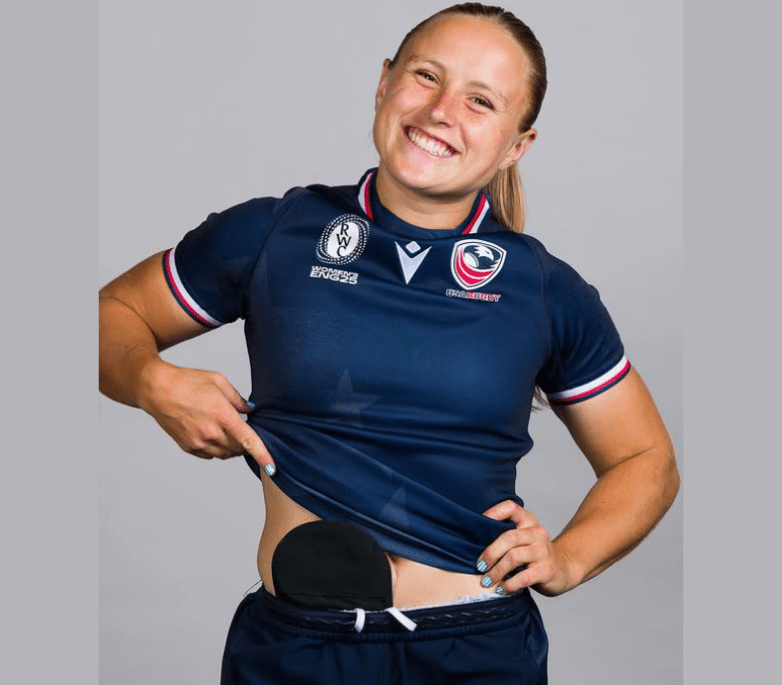
Cassidy Bargell is a scrum-half for the USA Women's 15s Rugby Union team. After suffering a bowel issue that came with alarming symptoms, she eventually underwent surgery to remove her colon and form an ileostomy. Just a few months later, she was back playing rugby, wearing her stoma bag.
Support our work
As a charity, ERIC supports thousands of families every year with all sorts of bowel and bladder issues, including children with stomas.
Bowel and bladder conditions still have a stigma attached, which can prevent people from seeking support. It shouldn't be this way. Here at ERIC, we're working hard to help break the stigma around wee and poo, to ensure nobody suffers in silence.
While health professionals offer the treatments, we provide the much-needed expert guidance and emotional support during this time to help them through what can be a daunting process, with our online resources and Helpline.
We’d like to develop more stoma related resources for families, but we rely on support from people like you to keep our vital work going.
Can you help children and their families living with bowel and bladder conditions to have a happy, healthy Christmas this year?