
Need further support?
Urinary Tract Infection in Children
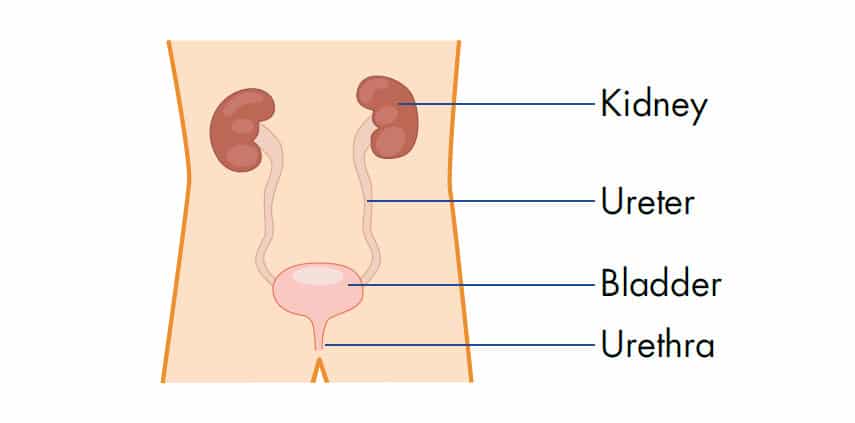
UTIs can make a child unwell, and can also impact on the way their bladder behaves, causing wee accidents (daytime and night time), frequency (doing lots of small wees) and urgency (needing to rush to the toilet).
This page outlines common symptoms of UTIs and their diagnosis, treatment and management.
Signs and Symptoms of UTIs in children
Common signs that your child may have a urinary tract infection include:
- Their wee might be smelly, cloudy or darker than normal
- Your child may complain of tummy ache or stingy, painful wee
- There may be visible blood in their wee
- Your child may have a high temperature
- Your child may do lots of small wees, more often than usual
- Your child may need to rush to the toilet urgently
- Your child may have daytime accidents and/or bedwetting
Children might have just one, or several of these symptoms. It is possible your child may not appear unwell, so you wouldn’t guess they have a UTI. If they have any of the symptoms on the list, always suspect a urinary tract infection.
Diagnosis of UTIs
If your child is unwell with a temperature and/or tummy and/or back pain, it is more likely that they have an upper urinary tract infection. If your child appears well in themselves but their urine is abnormal, it is more likely to be a lower urinary tract infection.
If you think your child has a UTI, book an appointment with your doctor or nurse. There is a simple urine test that can be done to confirm an infection. This will require a wee sample. The doctor will either test with a dipstick at the surgery and/or send to the laboratory for analysis. A urine specimen should be taken before starting antibiotics, as per NICE Guidelines.
To collect a wee sample from your child, a ‘clean catch’ method should be used wherever possible. This means collecting a sample which is free from contamination. You can follow the advice in this leaflet on how to collect this sample: How to collect a clean catch urine sample from children | CUH
Management of UTIs
UTIs must be investigated and treated. They are unlikely to go away on their own without treatment.
Babies
If your baby is under 3 months old and has a suspected UTI, they should be immediately referred to a paediatric specialist. This should also be the case if there is any suggestion of an underlying condition or if your child is particularly unwell.
Your baby may also be referred to a paediatric specialist if they are over 3 months old and are considered to have an upper UTI.
All children
If an infection is found, your child is likely to need to take antibiotics to clear it up. A simple dipstick test can very quickly confirm the likelihood of a UTI, but the test to determine which bacteria are causing the infection will take longer. The laboratory results may take about a week. So if your child is not particularly unwell, the doctor may suggest delaying the start of the antibiotics until they are sure which antibiotic is needed.
However, if your child is unwell, a broad-spectrum antibiotic will be prescribed i.e. one that kills the majority of the bugs that cause wee infections. When the lab result is received and it’s known which bacteria have caused the infection, they may suggest changing to a different antibiotic, to match the bugs with the right treatment.
Some children need to stay on antibiotics until well after the UTI is better, to help stop the infection coming back. A healthcare professional can explain more about this and do further tests if they think it’s necessary.
Your child may also need other medication to keep them comfortable and keep their temperature down.
Causes and Prevention of UTIs
Ascending infection
In girls, bacteria from the gut can enter the urinary tract through the tube that carries wee out of the body (the urethra). This may happen when the child:
- wipes their bottom
- soils their nappy or pants
As the urethra is shorter in girls and closer to the bottom opening (anus), it is particularly important to teach girls to wipe their bottoms from front to back (read our advice on bottom wiping). It is also really important to make sure your child changes their pants if they’re wet. Sore, damp skin can make UTIs more likely.
Bladder emptying problems
UTIs are very likely to occur when children have problems emptying their bladder.
- This might be due to constipation. The bladder and bowel sit very close to each other within our bodies. Lots of poo in the bowel can push on the bladder, making it difficult to completely empty the bladder. If wee is left inside too long, bacteria can grow, and this can lead to a UTI. Effectively treating constipation is key to preventing UTIs. Look at Advice for children with constipation.
- Bladders that are not used to filling and emptying properly can also fail to drain completely. Really working on the 4 steps will help promote your child’s bladder health.
- Some children’s bladders don’t empty properly because they have an underlying condition. Have a look at Daytime Bladder Problems – make sure your child has a physical examination to rule out any underlying cause for incomplete bladder emptying.
If it is suspected or confirmed that your child is not completely emptying their bladder when they wee, there are a few things you can do:
- Make sure they are drinking at least 8 cups of drink a day, of a suitable cup size for their age. If it is hot, or they are active, give extra drinks. This will help the bladder muscles to get the exercise they need.
- Check your child is in a really good position on the potty or toilet when they wee. Make sure their bottom and their feet are properly supported - look at Advice for children with daytime bladder problems for more information. Encourage them to take their time and relax – toys, books and music can all help.
- Encourage boys to sit down to do at least some of their wees. This is good practice for all boys, and even more important when they are working on effective bladder emptying.
- You might be advised to help your child learn to double void. This means to do a wee, then do another wee a few minutes later. It is important that your child gets off the toilet when they have done their first wee, then does something else for 3- 5 minutes, then returns to the toilet to see if they can do another wee. Provide plenty of encouragement and distraction to enable them to stay relaxed or they will find it very difficult to pass any wee.
If your child’s bladder emptying is very poor and they are having recurrent UTIs, plus all other management strategies have been tried, they may be asked to learn to perform Clean Intermittent Catheterisation (CIC). This means inserting a thin, flexible tube into the bladder via the urethra – the exit pipe. Once the wee has drained, the catheter is removed each time. If this is required, you and your child will be given all the necessary equipment and instructions by your healthcare professional.
Wee withholding
This is when a child ‘holds on’ to their wee, even though they have the urge to go. See our page Wee withholding for further information.
Vesicoureteral/Vesicoureteric reflux (VUR)
This is when urine leaks back up from the bladder into the ureters and kidney. If urine stays in the ureter for longer than normal, this can allow bacteria to multiply. Reflux up to the kidney will lead to a nasty upper tract infection.
Preventing recurrence
UTIs can recur, and therefore it is important to remain vigilant and to seek prompt treatment for any suspected reinfection.
You can help prevent recurrence by following the advice on this page and in the list below.
Children who have had a urinary tract infection should:
- Be encouraged to drink the correct amount of fluid for age to avoid dehydration (see Children's bladders page)
- Have any constipation assessed and treated
- Have access to clean toilets and sanitary facilities
- Be shown how to wipe correctly to minimise risk of infection (see Learning bottom wiping: a step-by-step guide)
- Have techniques in place to help them empty their bladders as fully as possible.
UTIs should not become a regular thing for a child. If your child has recurrent UTIs in the absence of constipation, and if they are drinking well and paying attention to hygiene, then they should have their problems investigated by a specialist. UTIs are particularly concerning in boys as they have a much longer urethra so the bugs should not be able to reach their bladder.
Recurrent UTI
Recurrent urinary tract infection (UTI) is where a baby/child/young person has:
- Two or more episodes of upper urinary tract infection or;
- One episode of upper urinary tract plus one or more episodes of lower urinary tract infection or;
- Three or more episodes of lower urinary tract infection.
All children with recurrent UTI should be referred to a paediatric specialist for assessment and investigations. However, if your child’s symptoms reappear immediately after stopping antibiotics this is more likely to be inadequate treatment rather than another UTI and should be discussed with your GP. Furthermore, if the length of time between UTIs is considerable, your GP may not feel that further investigation is required.
If recurrent UTI is confirmed, your child’s doctor may recommend a trial of a daily antibiotic to try and prevent the infections occurring. They might call these prophylactic antibiotics, or uro-prophylaxis. You will be provided with information about possible side effects, resistance and long-term use. A review appointment should be arranged within 6 months.
Possible investigations
Your child will not generally require any investigations if they have a one-off UTI that responds to treatment, unless they are under 6 months old.
An ultrasound scan – often called a ‘jelly on the belly’ scan - should be arranged if:
- Your child is under 6 months
- You child has had recurrent UTIs
- There is something unusual in your child’s presentation
A DMSA scan should be carried out 4-6 months following the last acute infection for all children with recurrent UTI, and possibly those with unusual symptoms. This scan is used to assess how well the kidneys are working and whether they contain any scarred areas. It works by injecting a substance called an isotope into your child’s veins - this is then absorbed by the kidneys. A series of pictures are taken, and a report is then sent to your child’s doctor. Further information can be found here: DMSA scan | Great Ormond Street Hospital.
Chronic UTI
The condition ‘chronic UTI’ is now officially recognised for adults by the NHS (www.nhs.uk/conditions/urinary-tract-infections-utis). The term refers to:
- Where UTI symptoms do not go away
- When short-term antibiotics do not work and
- Urine tests may or may not show an infection.
There is currently very limited research into whether the term is also applicable to children. People are beginning to define the difference is between recurrent and chronic UTI in children – more work needs to be done in this area so clear guidance can be given.
Last Reviewed: October 2025
Next Review: October 2028
On this page...
Upcoming events
Share this page