
Need further support?
Wee withholding
Holding on to wee is something young children can get into the habit of doing especially when they're potty training.
It's not as common as ‘poo holding’, or ‘stool withholding’ but can still be a worry if your child avoids emptying their bladder for long periods.
Find out more about why children sometimes hold in their wee and how you can help them.
What is wee withholding?
Children's bladders work best when they are emptied on a regular basis. Normal bladder emptying (also known as 'voiding') is around every 2-3 hours in school aged children.
Babies and younger children pass urine more frequently whilst their bladder is growing.
Some children hold their pee for long periods and overstretch their bladders. They may find it hard to relax their muscles when they sit on the toilet and this affects their ability to wee normally. Over time, the different muscles of the bladder can stop working together as they should.
Why is my child not weeing regularly?
Reasons can include:
- Constipation: having an overloaded bowel can squash a child's bladder and stop it from being able to fill and empty properly. Check if your child may be struggling with constipation and find out how to treat it.
- If your child withholds their poo, they may start to hold their wee too. By sitting on the toilet for a wee, they are more likely to feel the urge for a poo and they might not be able to stop the poo coming out. So they may avoid sitting at all, to try and stay in control.
- Being away from the comfort of home and family when starting nursery, school or another childcare setting can begin a pattern of wee withholding, as a change in routine and/or a new environment can sometimes be a trigger. As the periods of time spent away from home become longer, the holding can become more of an issue. A child may hold on all day at nursery for example and only do a wee when they get home.
- If your child has had a urinary tract infection (UTI), they may associate the pain they had with weeing, so avoid passing urine even after any infection has been treated.
- Pain and discomfort when passing a wee can also be felt if your child isn't drinking enough. Their urine can become concentrated and may sting, so they avoid doing a wee.
- Being denied access to the toilet at school can mean they have to hold on, which can then become a habit. Get more advice on toileting at school on our School toilets information page.
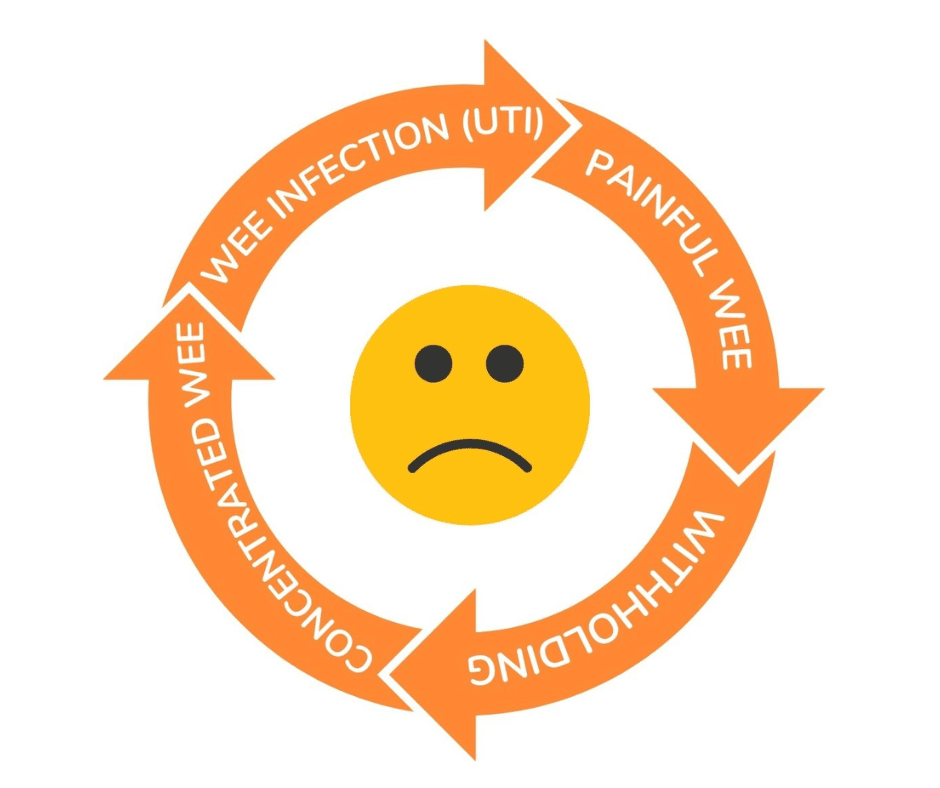
Wee withholding cycle
Just like when children hold on to their poo, avoiding doing a wee can lead to other problems and so the cycle goes on.
Holding on is likely to overstretch the bladder. It also makes the child more likely to develop a urinary tract infection (UTI). The more concentrated and painful their wee is to pass, the more a child tries to avoid weeing all together.
How to help with wee withholding:
1. Get the drinking right.
Children should have a minimum of 6 – 8 cups of drink a day. If your child’s bladder is full, it is more difficult for them to hold on and easier for them to do a wee. See these pages for more information on how much and what children should drink: Children’s bladders; How to get your kids to drink more water; ERIC’s Drinking Reward Chart.
2. Help your child to relax on the potty/toilet:
- Practice sitting on the potty or toilet every few hours. Don't mention wee or poo – focus on sitting and relaxing. This is important as you have to relax to wee. Make your child more comfortable by supporting their feet with a step/stool and using a children’s toilet seat if they are using the toilet. Try having music playing, reading a story together or singing a song.
- Gently blowing bubbles whilst sitting comfortably on the toilet can help us to empty our bladder and bowel. There are lots of ideas in our blog about relaxing on the toilet.
- Look at your toilet environment and talk to your child about the toilets at home and when they are out. If your child is more sensitive to things like smell, touch, sound or visual inputs, you might find it helpful to read our information in our Toileting and Sensory Needs resource.
My child won’t or can’t wee – what should I do?
- Some children find having a wee whilst in the bath is easier. This is a great temporary solution but obviously will not always be possible. Or they may be able to wee into a potty placed in the bath or shower.
- You can think more about relaxation. Try using:
- Warmth – a blanket round your child whilst they sit on the potty or toilet can help them relax. Try giving them a gently warmed wheat bag or similar to hold.
- Pressure helps some children to relax – try a heavy towel, toy or blanket over their lap whilst on the toilet, and/or try rubbing their back or arms with firm strokes.
- Deep breathing can also help – try some children’s mindfulness exercises, and blow bubbles with big, long, slow breaths.
- Vibration is another tip. Holding an electric toothbrush (without the brush attached and wrapped in a small, soft cloth) or a small, handheld massage gun might enable your child to relax.
- Some children have difficulty starting a wee. This is often referred to as hesitancy and this must be assessed by a Health Care Professional. It may help to use a bladder stimulator – a vibrating device they can hold over the full bladder whilst sitting comfortably on the toilet.
- Some children may benefit from being given a nappy to wee in temporarily. This should be given only at ‘wee’ times to help the child relax and wee. This can gradually be removed. Read our advice in Children who will only poo in a nappy and other toilet avoiders for information on how to do this.
What if none of these tips have worked and my child still doesn’t wee?
If your child has been unable to wee for some hours and is getting uncomfortable, seek medical help urgently.
Holding onto wee for long periods of time can overstretch the bladder, and can also make your child more likely to develop a urinary tract infection. Ensuring your child is drinking enough, ruling out and/or treating constipation and encouraging a relaxed toileting routine can all help. If you have any concerns about your child's bladder health, please book an appointment with a doctor or nurse.

Next Review: October 2028
Last Reviewed: October 2025
- All
- Factsheets
- For Parents
- Treatment
How to maintain a healthy bladder and tackle common problems such as wetting accidents, withholding and UTIs.
Restricting access to the toilet at school can aggravate or even create continence problems. Find out what your child's rights are at school around using the toilet.
Get help understanding how fear of the toilet can affect your child and how you can support them to overcome their worries.
On this page...
Upcoming events
Share this page